Buy casino-vip.eu ?
We are moving the project
casino-vip.eu .
Are you interested in purchasing the domain
casino-vip.eu ?
domain@kv-gmbh.de · 0541-91531010
Buy casino-vip.eu ?
What is the question about the holding relay remanence relay?
The question about the holding relay remanence relay likely pertains to how the remanence relay functions in relation to the holding relay. The inquirer may want to know how the remanence relay affects the holding relay's operation, or how the two relays work together in a specific electrical or control system. Additionally, the question may seek to understand the purpose of the remanence relay in relation to the holding relay and how it contributes to the overall functionality of the system. **
"Does the relay only switch with increased voltage?"
No, the relay does not only switch with increased voltage. The relay is designed to switch based on a specific input signal or condition, which could be voltage, current, temperature, or other factors. Once the input signal reaches a certain threshold, the relay will switch and change the state of the circuit it is controlling. Therefore, the relay can switch with increased voltage, but it can also switch based on other input conditions. **

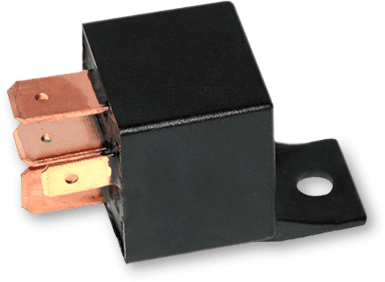
Similar search terms for QUINTON-HAZELL-XRL201-Relay
Top-Angebote
Products related to QUINTON-HAZELL-XRL201-Relay:
-
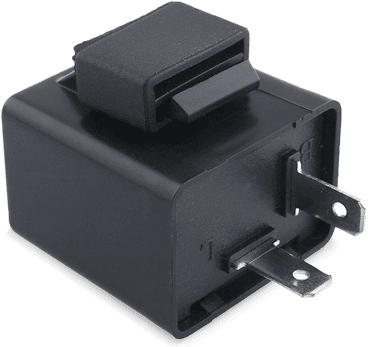
QUINTON HAZELL XFL100 Indicator relayVoltage [V]: 12; Length [mm]: 39; Width [mm]: 61; Height: 39; Number of pins: 2; Mounting Type: Plugged; Relay function: Indicator; Operating Mode: Electric; Construction Year from: 09/1976, 09/1967, 09/1971, 09/1969, 09/1972, 08/1976, 09/1970, 10/1964; Construction Year to: 09/1970, 08/1990, 08/1983, 04/1982, 09/1982, 09/1975, 08/1975, 09/1989, 08/19845,59 £*Shipping: 8,45 £Secure redirect to the provider



-
Does the relay only work in warmer temperatures?
No, relays can work in a wide range of temperatures, not just warmer temperatures. Relays are designed to operate within specific temperature ranges, and many are capable of functioning in both high and low temperature environments. However, extreme temperatures can affect the performance and lifespan of relays, so it's important to choose the right type of relay for the specific temperature conditions in which it will be used. **
-
What is the difference between a safety relay and a relay?
A safety relay is a type of relay that is specifically designed to provide a higher level of safety in industrial applications. It is used to monitor and control safety functions, such as emergency stops and safety gates, to ensure the safety of personnel and equipment. Safety relays are designed to meet specific safety standards and have built-in features such as redundancy, self-monitoring, and fault detection. On the other hand, a relay is a general-purpose electromechanical switch that is used to control the flow of electricity in a circuit. It is commonly used to control high-power devices such as motors, heaters, and solenoids. Relays do not have the same level of safety features as safety relays and are not designed to meet specific safety standards. **
-
Are there relay races?
Yes, relay races are a popular track and field event where teams of runners take turns running a set distance before passing a baton to the next runner. Relay races are also commonly found in swimming and skiing competitions. The relay format adds an element of teamwork and strategy, as each runner's performance directly impacts the success of the team. Relay races are often a thrilling and fast-paced event to watch, as the baton exchanges and sprint finishes can be very exciting. **
-
How is the connection of relay 2501 with the Finder relay made?
Relay 2501 is connected to the Finder relay by wiring the control signal from the output of relay 2501 to the input of the Finder relay. This connection allows relay 2501 to control the operation of the Finder relay, activating or deactivating it based on the control signal it receives. The specific wiring configuration will depend on the type of relay and the control signal requirements, but typically involves connecting the control terminals of both relays using appropriate wiring and connectors. **

What is the difference between a relay and a impulse relay switch?
A relay is an electrically operated switch that uses an electromagnet to mechanically operate the switch contacts. It is typically used to control high-power devices with a low-power signal. On the other hand, an impulse relay switch is a type of relay that is specifically designed to respond to short-duration electrical pulses or signals. It is commonly used in applications where a momentary signal needs to trigger a specific action. **
What is the difference between a surge relay and a regular relay?
A surge relay is designed to protect electrical equipment from sudden voltage spikes or surges, while a regular relay is used to control the flow of electricity in a circuit. Surge relays are equipped with additional features such as surge protection components and fast response times to quickly divert excess voltage away from sensitive equipment. Regular relays, on the other hand, are typically used for switching and controlling the flow of current in a circuit based on specific conditions or inputs. **
Top-Angebote
Products related to QUINTON-HAZELL-XRL201-Relay:
-
QUINTON HAZELL XFL100 Indicator relayVoltage [V]: 12; Length [mm]: 39; Width [mm]: 61; Height: 39; Number of pins: 2; Mounting Type: Plugged; Relay function: Indicator; Operating Mode: Electric; Construction Year from: 09/1976, 09/1967, 09/1971, 09/1969, 09/1972, 08/1976, 09/1970, 10/1964; Construction Year to: 09/1970, 08/1990, 08/1983, 04/1982, 09/1982, 09/1975, 08/1975, 09/1989, 08/19845,59 £*Shipping: 8,45 £Secure redirect to the provider
-
What is the question about the holding relay remanence relay?
The question about the holding relay remanence relay likely pertains to how the remanence relay functions in relation to the holding relay. The inquirer may want to know how the remanence relay affects the holding relay's operation, or how the two relays work together in a specific electrical or control system. Additionally, the question may seek to understand the purpose of the remanence relay in relation to the holding relay and how it contributes to the overall functionality of the system. **
-
"Does the relay only switch with increased voltage?"
No, the relay does not only switch with increased voltage. The relay is designed to switch based on a specific input signal or condition, which could be voltage, current, temperature, or other factors. Once the input signal reaches a certain threshold, the relay will switch and change the state of the circuit it is controlling. Therefore, the relay can switch with increased voltage, but it can also switch based on other input conditions. **
-
Does the relay only work in warmer temperatures?
No, relays can work in a wide range of temperatures, not just warmer temperatures. Relays are designed to operate within specific temperature ranges, and many are capable of functioning in both high and low temperature environments. However, extreme temperatures can affect the performance and lifespan of relays, so it's important to choose the right type of relay for the specific temperature conditions in which it will be used. **
-
What is the difference between a safety relay and a relay?
A safety relay is a type of relay that is specifically designed to provide a higher level of safety in industrial applications. It is used to monitor and control safety functions, such as emergency stops and safety gates, to ensure the safety of personnel and equipment. Safety relays are designed to meet specific safety standards and have built-in features such as redundancy, self-monitoring, and fault detection. On the other hand, a relay is a general-purpose electromechanical switch that is used to control the flow of electricity in a circuit. It is commonly used to control high-power devices such as motors, heaters, and solenoids. Relays do not have the same level of safety features as safety relays and are not designed to meet specific safety standards. **
Similar search terms for QUINTON-HAZELL-XRL201-Relay
-
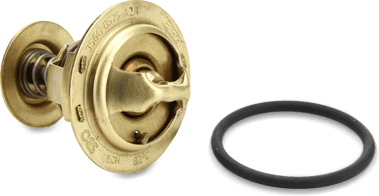
QUINTON HAZELL QTH667K ThermostatSupplementary Article / Supplementary Info: with gasket/seal; Opening Temperature [°C]: 80; TecDoc Engine Number: 25802, 24653, 24655, 20267, 17507, 20041, 24437, 20046, 19912, 23306, 24426, 23307, 24436, 26795, 25804, 24435; Emissions Standard: Euro 4; for RPO number from: 10311, 10290, 1033926,99 £*Shipping: 0,00 £Secure redirect to the provider
-
Are there relay races?
Yes, relay races are a popular track and field event where teams of runners take turns running a set distance before passing a baton to the next runner. Relay races are also commonly found in swimming and skiing competitions. The relay format adds an element of teamwork and strategy, as each runner's performance directly impacts the success of the team. Relay races are often a thrilling and fast-paced event to watch, as the baton exchanges and sprint finishes can be very exciting. **
-
How is the connection of relay 2501 with the Finder relay made?
Relay 2501 is connected to the Finder relay by wiring the control signal from the output of relay 2501 to the input of the Finder relay. This connection allows relay 2501 to control the operation of the Finder relay, activating or deactivating it based on the control signal it receives. The specific wiring configuration will depend on the type of relay and the control signal requirements, but typically involves connecting the control terminals of both relays using appropriate wiring and connectors. **
-
What is the difference between a relay and a impulse relay switch?
A relay is an electrically operated switch that uses an electromagnet to mechanically operate the switch contacts. It is typically used to control high-power devices with a low-power signal. On the other hand, an impulse relay switch is a type of relay that is specifically designed to respond to short-duration electrical pulses or signals. It is commonly used in applications where a momentary signal needs to trigger a specific action. **
-
What is the difference between a surge relay and a regular relay?
A surge relay is designed to protect electrical equipment from sudden voltage spikes or surges, while a regular relay is used to control the flow of electricity in a circuit. Surge relays are equipped with additional features such as surge protection components and fast response times to quickly divert excess voltage away from sensitive equipment. Regular relays, on the other hand, are typically used for switching and controlling the flow of current in a circuit based on specific conditions or inputs. **
* All prices are inclusive of VAT and, if applicable, plus shipping costs. The offer information is based on the details provided by the respective shop and is updated through automated processes. Real-time updates do not occur, so deviations can occur in individual cases. ** Note: Parts of this content were created by AI.